
Careful Setup Helps Cabinets Stay Level, Straight, and Easy to Use
Proper kitchen cabinet installation helps stop crooked doors, uneven gaps, sticking drawers, and loose hardware. When cabinets are set level, fastened to solid wall points, and spaced the right way, they work better and last longer. In homes around Atlanta, GA, small setup errors can grow into bigger problems over time, especially in busy kitchens where cabinets get used every day.
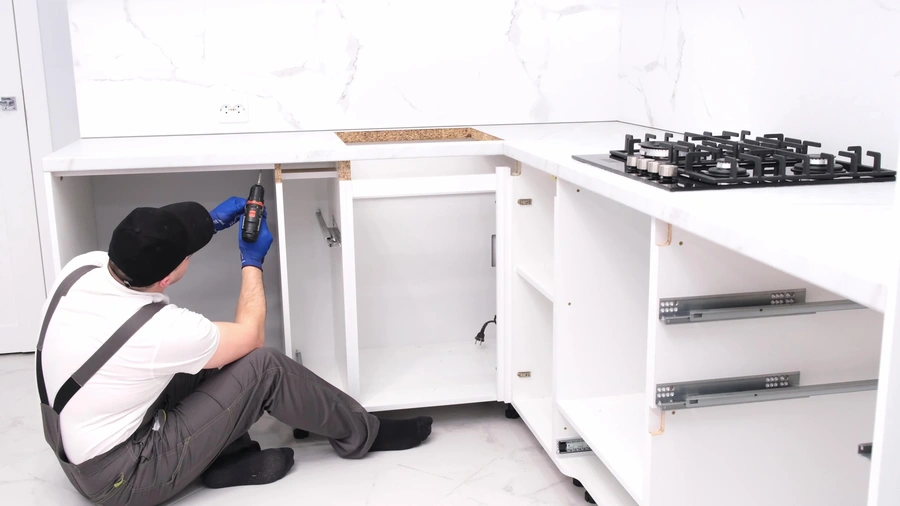
Quick Diagnosis Summary
Most alignment problems start during kitchen cabinet installation, not months later. A cabinet may look fine at first, then shift as weight builds inside. If the box was not level, if the wall was bowed, or if screws missed the wall studs, doors and drawers can move out of line. Good planning and careful setup help stop these issues before they start.
Common Symptoms
Alignment issues are often easy to spot. The signs may seem small at first, but they can lead to wear, damage, and daily stress. A well-done kitchen cabinet installation helps avoid these trouble signs:

- cabinet doors that swing open on their own
- doors that rub against each other
- uneven gaps between doors and drawer fronts
- drawers that stick or slide unevenly
- cabinets that look sloped across the top
- shelves that seem tilted
- trim pieces that pull apart at the seams
These signs often point to a setup problem, not just a hardware problem. A hinge adjustment may help for a short time, but the root cause may still be there.
Likely Causes
Many things can cause cabinets to go out of line. Some problems come from the wall or floor. Others come from rushed work. During kitchen cabinet installation, each cabinet must connect well to the next one and sit flat against the space where it belongs.
One common cause is an uneven floor. If the base line starts off wrong, every cabinet after that can drift. Another cause is a wall that is not flat. Even a small bow in the drywall can twist a cabinet box. Poor fastening is also a big issue. If screws do not hit solid framing, the cabinet may pull loose when loaded with dishes, food, or cookware.
Hardware can also play a role. Hinges and drawer slides need correct spacing. If they are mounted a bit off, the front faces may not line up well. This can happen in kitchen cabinet installation or in later repair work. Even the service category keyword can fit here as a broad service reference when a full kitchen update involves more than cabinet mounting alone.
What to Check First
Before trying a fix, start with a few simple checks. These steps can help show if the problem is minor or if the whole cabinet line has shifted.
- look at the gaps between doors and drawers
- place a level across the top of the cabinets
- check if the cabinet sides are flush with each other
- open and close each door slowly
- test drawers with light and full loads
- inspect screw points inside the cabinets
- look for cracks near fasteners or trim joints
If one door is off but the cabinet box is still level, the problem may be a hinge setting. If several cabinets show the same drift, the base setup may be the true cause.
Safe Fixes Vs Pro-Level Fixes
Some fixes are simple and safe for a homeowner. Tightening a hinge screw, adjusting a soft-close hinge, or realigning a drawer front may solve a small issue. Replacing worn hardware can also help when the cabinet box is still stable.
Other fixes need more skill. If cabinets were mounted out of level, they may need to be loosened, shimmed, and reset. If screws missed studs, the units may need to come down and be reattached the right way. A bowed wall may also need fillers or scribing work so the cabinet faces stay straight. These jobs affect the full kitchen cabinet installation, so mistakes can spread fast if handled the wrong way.
A good rule is this: if the problem is only at the door or drawer front, a basic adjustment may be enough. If the cabinet box itself has moved, deeper repair is often the better path.
Prevention Tips
The best way to stop alignment issues is to prevent them during kitchen cabinet installation. Care at the start saves time, money, and stress later. Good installers check the room before the first cabinet goes on the wall.
- measure the floor for high and low spots
- mark a level reference line across the wall
- find and mark every wall stud
- use shims where needed, not where guessed
- clamp cabinets together before fastening
- check level and plumb often during setup
- avoid overloading new cabinets right away
It also helps to use quality hardware and the right screw length. Small details matter. A clean, careful kitchen cabinet installation gives doors and drawers a better chance to stay aligned for years.
Final Recommendation
If your cabinets show uneven lines, sticking drawers, or drifting doors, the cause may go back to the original setup. In Atlanta, GA, it helps to have the space checked before a small issue turns into cabinet damage or wall damage. At Finishing Touch Interior Carpentry LLC, we can inspect the layout, fix mounting problems, and handle kitchen cabinet installation with care. Call us at (770) 536-5675 to schedule help or ask questions about the next step.